


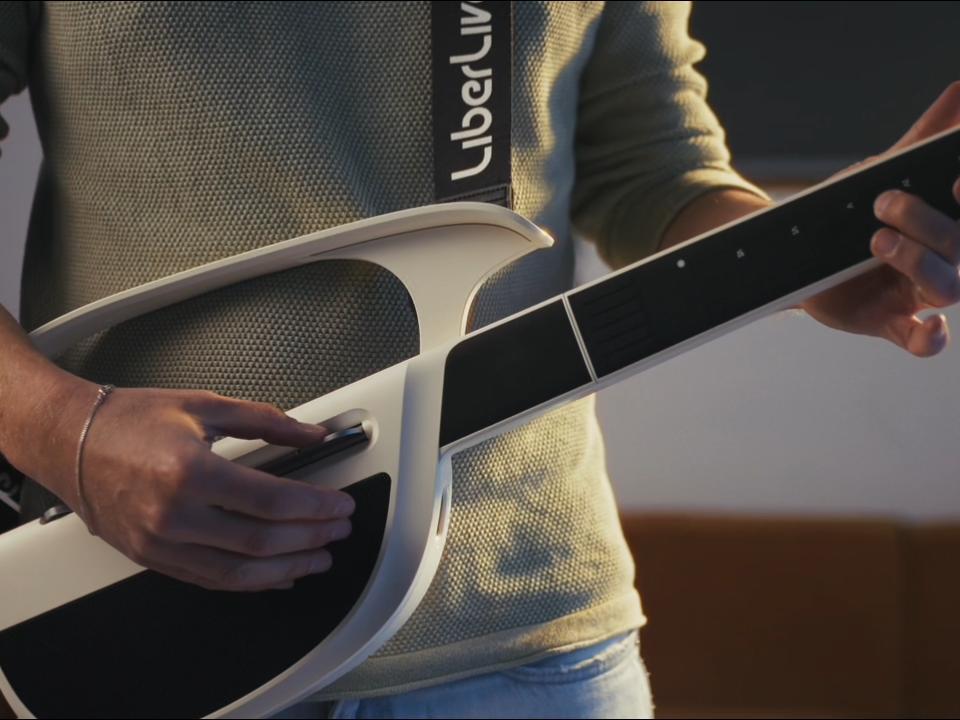

Smart guitar, digital guitar, and MIDI guitar all sound like they belong in the same category. They do not. Each one solves a different problem for a different kind of player.
A smart guitar is built to help new or casual players start playing songs faster. A digital guitar keeps the traditional playing feel but adds built-in technology such as effects or app control. A MIDI guitar is mainly a controller for recording, production, and software instruments.
Guitar is still a huge category. One commonly cited estimate puts the number of guitar players worldwide at around 50 million. What has changed is the number of ways people can now start, practice, and create with a guitar-like instrument.
Table of Contents
- What Is a Digital Guitar?
- What Is a MIDI Guitar?
- What Is a Smart Guitar?
- Smart Guitar vs Digital Guitar vs MIDI Guitar: Quick Summary
- Which Type of Guitar Is Right for You?
- FAQs
What Is a Digital Guitar?

A digital guitar is the closest of the three to a traditional guitar. It usually keeps the familiar strings, frets, and playing technique, then adds technology inside the instrument.
Depending on the model, that technology can include built-in effects, amp simulation, headphone output, recording features, app control, or Bluetooth functions. The point is not to remove traditional guitar technique. The point is to give the player more sound options without carrying extra pedals, cables, or recording gear.
How Does a Digital Guitar Work?
A digital guitar plays like a normal guitar, but part of the sound is processed electronically. For example, Yamaha describes its TransAcoustic line as using internal actuators to add effects to the guitar sound without an external amp or cables. Some models add reverb, chorus, delay, app control, or looper functions.
That means a player can sit down with one instrument and get different tones more easily than with a completely acoustic setup.
Why Do Some People Prefer Digital Guitars?
The biggest reason is flexibility. A player can explore more sounds without building a pedalboard or buying a room full of extra gear.
- Built-in effects and tone controls
- Easier headphone practice at home
- Useful recording or practice features
- More sound variety from one familiar instrument
For beginners, that variety can make practice more fun. For intermediate players, it can make experimenting with tone simpler.
Things to Consider Before Buying One
More technology does not automatically make guitar easier to learn. You still need finger placement, rhythm, chord changes, and coordination. A digital guitar can make practice more interesting, but it does not remove the basic learning curve.
Some models can also feel busy at first because there are more settings to understand.
Who Is a Digital Guitar Best For?
A digital guitar is usually best for:
- Intermediate players who want to experiment with different tones
- Players who still want the feel of a traditional instrument
- People who want built-in effects or recording features without buying extra gear
What Is a MIDI Guitar?

A MIDI guitar works differently. Instead of simply changing the sound of the guitar itself, it turns your playing into digital information that can control software instruments.
That means you can play a guitar part and trigger piano, synth pads, electronic drums, strings, or other virtual instruments through music software. At that point, the guitar is both an instrument and a controller.
How Does a MIDI Guitar Work?
When you play a note, the MIDI guitar or pickup system sends performance data to connected hardware or software. The connected system decides what sound you hear.
Some MIDI guitars have the MIDI system built into the guitar. Others use a special pickup or controller added to a standard guitar. Jamstik describes its Studio MIDI Guitar as using a hexaphonic MIDI pickup with USB-C, TRS-MIDI, and Bluetooth-MIDI connectivity.
Why Do Some People Prefer MIDI Guitars?
MIDI guitars are appealing because they open up sounds that a normal guitar cannot produce on its own.
- You can control a wide range of virtual instruments
- You can connect guitar playing with recording software
- You can use guitar technique for songwriting and production
- You can experiment with sounds at home without owning every instrument
For people who already like recording, arranging, or producing music, that can be a major advantage.
Things to Consider Before Buying One
A MIDI guitar usually has a steeper setup curve than the other two options. You may need software, a DAW, plug-ins, drivers, or extra routing before the instrument does what you expect.
It is also not designed to make beginner guitar technique easier. If your main goal is to play your first songs quickly, a MIDI guitar is probably more tool than teacher.
Who Is a MIDI Guitar Best For?
A MIDI guitar is usually best for:
- Intermediate or advanced players interested in recording
- Musicians who are comfortable with software
- Songwriters and producers who want guitar-based control over digital sounds
What Is a Smart Guitar?

A smart guitar is built around accessibility. Its job is to help people who have never played guitar, or who gave up before, start playing recognizable songs sooner.
Instead of forcing every beginner through the hardest parts of traditional guitar from day one, a smart guitar simplifies the early experience. Depending on the model, it may use touch controls, guided chords, built-in rhythms, app support, or a different strumming system.
How Does a Smart Guitar Work?
The details vary by product, but the goal is consistent: reduce the early friction that stops beginners from playing.
- Touch controls can reduce finger strain
- Guided chord systems can make chord changes easier to understand
- Built-in rhythms can help players keep time
- App connectivity can provide songs, tutorials, and extra functions
- Simplified strumming can help the player focus on timing and musical feel
Some models replace traditional strings with touch-sensitive surfaces or pressure pads. The LiberLive C1, for example, is a stringless smart guitar designed around tap, strum, and play interaction.
Why Do Some People Prefer Smart Guitars?
Smart guitars are different from the standard beginner guitar experience. They are less about proving you can survive the hardest first month and more about getting you into the musical part sooner.
- Much easier chord playing
- Less finger strain for beginners
- Built-in rhythms and accompaniment features
- Learning support through apps
- A simpler way to sing and play at the same time
For someone who wants to enjoy playing songs instead of spending months fighting finger pain and chord changes, a smart guitar can be a better starting point.
Things to Consider Before Buying One
The tradeoff is feel. A smart guitar may not feel exactly like a traditional acoustic or electric guitar, especially if it uses a stringless design.
If you later move to a standard guitar, some skills can carry over, especially rhythm, song structure, and musical confidence. Some traditional technique will still need separate practice.
Who Is a Smart Guitar Best For?
A smart guitar is usually best for:
- Complete beginners
- Casual players and singers
- People who want to make music without starting with the hardest technical barriers
Smart Guitar vs Digital Guitar vs MIDI Guitar: Quick Summary
All three categories use modern technology, but they are not built for the same person.
| Guitar Type | Main Focus | Best For | Traditional Guitar Feel | Beginner Friendly? |
|---|---|---|---|---|
| Smart Guitar | Simpler and more accessible playing | Beginners, casual players, singers | Less traditional; more access-focused | Very |
| Digital Guitar | Added features and sound flexibility | Players wanting modern features | Usually yes | Moderate |
| MIDI Guitar | Music software and digital sound control | Recording, production, experimentation | Often yes, depending on setup | Better for experienced players |
So, Which Type of Guitar Is Right for You?
Choose based on the problem you want the instrument to solve.
- Choose a smart guitar if you are new, casual, song-driven, or mainly want the fastest route into playing music.
- Choose a digital guitar if you already like the feel of a traditional guitar and want more built-in sound options.
- Choose a MIDI guitar if you are comfortable with music software and want a guitar-style controller for production.
If your goal is to pick up an instrument and start playing with the least possible friction, a smart guitar is the most beginner-friendly path. The LiberLive C1 is designed for that exact use case: tap, strum, and play with app-supported songs and a stringless design.
For setup help after purchase, readers can also use the LiberLive app download page and product support resources.
FAQs
Is a smart guitar easier to learn than a normal guitar?
Yes, in most cases. A traditional guitar gives beginners chord shapes, finger placement, strumming patterns, and finger pain all at once. A smart guitar reduces enough of that early friction to make the first stage simpler.
Can you still play real songs on a smart guitar?
Yes. That is the point. Smart guitars are built to help people play recognizable songs sooner, often with app support or guided playing features.
Do digital guitars still feel like normal guitars?
Most of the time, yes. Many digital guitars keep traditional strings, frets, and playing technique. The difference is the technology added on top, such as built-in effects, app control, or recording features.
Which type is best for complete beginners?
A smart guitar is usually the best fit for complete beginners because it is built around access and early enjoyment, not just traditional technique.
Do MIDI guitars need a computer to work?
Many MIDI setups are designed to work with music software, a DAW, or another MIDI-capable device. Some systems can run without a full DAW, but MIDI guitars still make the most sense for people who are comfortable with a more technical setup.
Can I move from a smart guitar to a traditional guitar later?
Yes, but it is not a one-to-one transfer. Rhythm, confidence, song structure, and timing can help. Finger strength, fretboard technique, and traditional chord shapes will still need practice on a standard guitar.
Share this article:
What Is a Smart Guitar? A Beginner-Friendly Guide