


How to Play Guitar for Beginners: A Simple Guide to Get You Started

You have picked your guitar and are wondering: where do I even start? Don’t worry—every guitarist, from campfire strummers to stadium rockers, once asked the same question. Guitars are one of the most recognized instruments in the world.
Once you start looking, you will find a huge variety of them available, which can feel a little overwhelming. Learning to play guitar takes time, but with the right approach, a few simple steps, and a little consistency, you can learn quickly.
If you’re asking how to play guitar for beginners, this guide will walk you from your very first hold to simple songs and a practice plan you can actually stick with.
We will also look at a few tips for people who want a tech-friendly shortcut, some quick exercises to try, and ways to choose the tools that help you keep going.

The Importance of Starting with the Right Mindset
Guitar is a skill you build slowly. For your first few attempts, you might hear squeaks, or your fingertips might get sore. This is normal because your hands are not yet used to the motions. Short but consistent daily practice—around 10 to 20 minutes—is usually more productive than long, irregular sessions.
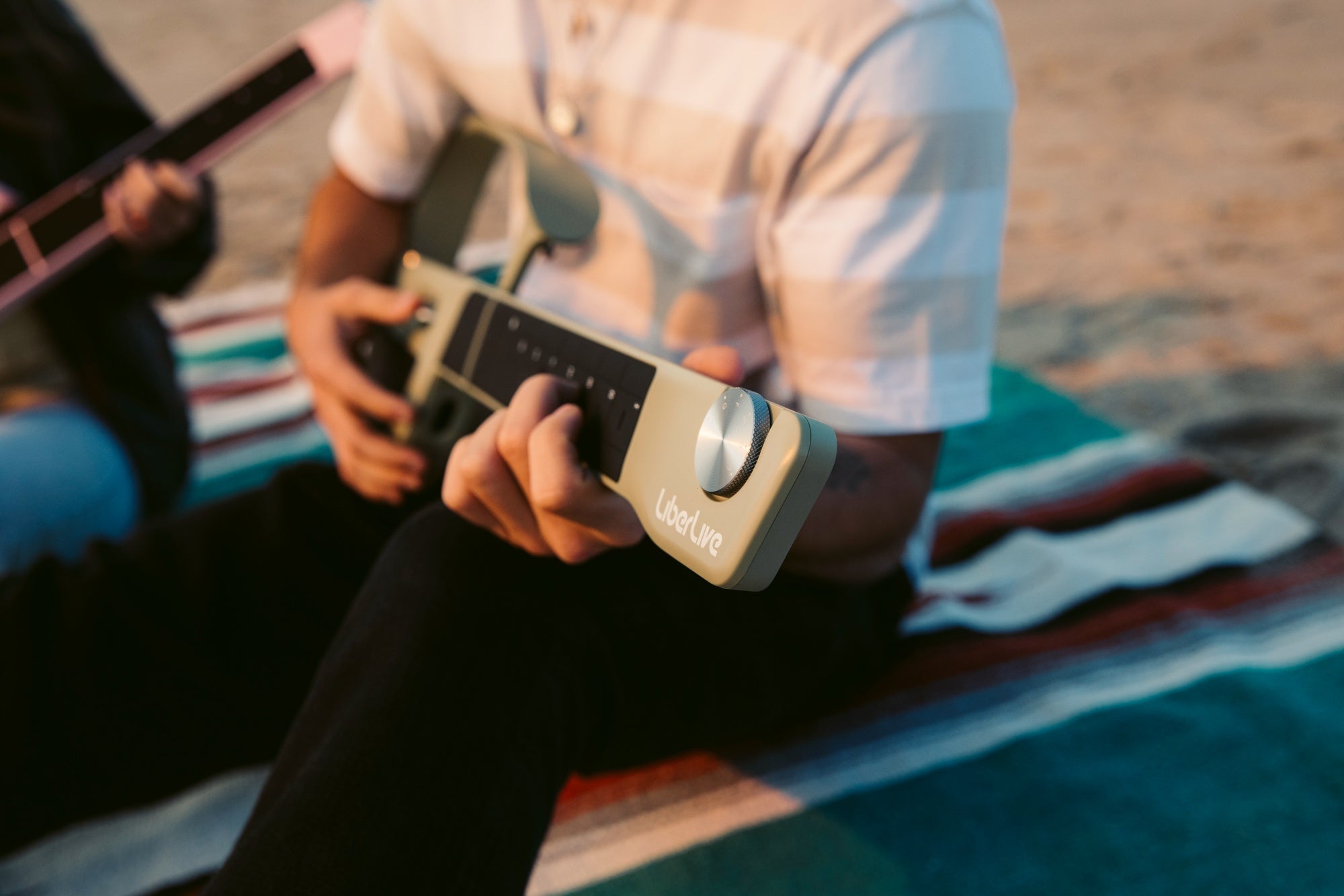
If learning feels too hard, look for tools that lower the barrier and make the process easier. Some modern instruments like the LiberLive C1 are made specifically to help beginners get musical results fast without the initial pain of pressing strings.
Choose Your First Instrument (Traditional vs. Smart)
When choosing a guitar, there are two main options: traditional or smart.
Traditional Guitar Options
If you want the traditional experience, you can go with either a nylon-string or a steel-string acoustic guitar. Nylon strings are easier on your fingers and work well for learning the basics. Steel strings are often used for brighter sounds in pop and rock music.
Smart Guitar Options
Looking for a tech-assisted route? The LiberLive C1 is a stringless smart guitar that uses pressure-sensitive chord pads and a strum or flick paddle to simulate playing. It pairs with a companion app that gives interactive chord sheets and real-time guidance, which many beginners find motivating and fast to learn with.
Protip: Using a smart device like this can remove some early friction without taking away from learning core music fundamentals.
Essential Gear to Get Started
Keep your starter kit simple. You do not need much to begin:
- A beginner-friendly guitar or a smart option like the LiberLive C1
- A tuner, either clip-on or app-based
- A medium-thickness pick and a strap
- A notebook to track chords and songs

If you choose the LiberLive C1, it is portable and foldable, with built-in speakers and a companion app that helps you learn songs visually. Its battery and speaker setup also make it useful for short practice sessions or small performances.
First Steps: How to Hold a Guitar
Correct posture goes a long way when learning how to play guitar. It helps you stay comfortable and play without unnecessary pain.
- Sit upright and let the guitar rest on your thigh.
- Keep the neck angled slightly upward so your hand can read the fretboard more comfortably.
- Hold the pick between your thumb and index finger with a relaxed grip.
If you are using a smart instrument with pads, hold it the same way you would a regular guitar. The motions transfer well and help you learn rhythm and timing.
How to Play Guitar for Beginners: First Chords
Chords are the foundation of your musical journey. What many people do not realize is that with only a few basic chords, you can already play a lot of songs.
Start with these:
- G major
- C major
- D major
- E minor
- A minor
Work on chord shapes slowly, then increase speed as you get more comfortable. To feel progress, learn one chord change per practice session and repeat it until it feels natural.
For people using the LiberLive C1, the LiberLive channel or app can show chord layouts and light up the neck to guide finger positions in real time. That visual help can speed up memorization.
Strumming Basics: Develop a Rhythm, Not Just Speed
Rhythm matters because even simple melodies can sound polished when played in time.
- Begin with a downstroke on each beat: 1–2–3–4.
- Once steady, add upstrokes between beats: down, down-up, down-up.
- Train with a metronome or with the drum patterns built into certain smart guitars and apps.
If you are using a stringless smart guitar, many models include built-in drum machines and rhythm accompaniments to help you stay in time.
A Simple Practice Plan (15 Minutes a Day)
A practice schedule helps organize your learning and makes progress easier to track. Here is a simple 15-minute routine:
- Warm-up (2 minutes): Stretch your fingers or lightly pick your guitar.
- Chord practice (5 minutes): Switch between two chords slowly, then a little faster.
- Strumming and rhythm (4 minutes): Play a simple strum with a metronome or backing drum.
- Song time (4 minutes): Try playing an easy song using the chords you have learned.
Pro tip: Record yourself practicing. Listening back helps you notice small improvements and stay motivated.
Apply Songs Early
Playing songs you love is one of the best ways to learn. Choose simple pop or folk songs with two to four chords and practice them with a slow strumming pattern.
For beginners, learning one complete song often feels more rewarding than doing endless drills. A goal of one song per week is realistic and motivating.

Common Beginner Problems and Quick Fixes
Fingers Hurt or Chords Buzz
Fix: Check your thumb position and keep it behind the neck for better leverage. Press closer to the fret wire and keep your fingers arched.
Chords Sound Muddy When You Switch
Fix: Slow your transitions. Lift only the fingers you need and keep unused fingers relaxed.
Timing Feels Weak
Fix: Practice with a metronome or backing track. Start slow and raise the tempo in small steps.
If you use a smart guitar, built-in tempo control and backing loops can make timing practice easier. That helps many beginners solve rhythm problems earlier.
How Technology Can Speed Learning (Use It, Don’t Rely On It)
Tech tools like apps, loopers, backing tracks, and interactive instruments help remove friction. They can show chord shapes, give instant feedback, and provide backing beats so you can practice like you are playing with a band.

The LiberLive C1, for example, pairs with an app that allows chord customization, tempo changes, and real-time LED guidance. It also offers multiple instrument sounds, such as guitar, bass, and piano, along with backing drums. This lets a beginner focus on timing and singing without the early struggle of string pressure.
Pro tip: Use tech as a learning aid, then transfer those skills to any guitar later if you want the traditional feel.
Songs to Try in the First Month
Pick easy, familiar tunes. Try progressions like these:
- “Horse With No Name” style progressions
- Simple Beatles or Ed Sheeran acoustic songs
- Nursery-rhyme style melodies for straight rhythm practice
If you prefer guided play, use tutorial videos or the interactive song sheets that some smart guitars offer. They can light up the next chord and show strum patterns, which removes guesswork and boosts confidence.
Small Goals That Keep You Moving
Set tiny, clear goals each week so your progress feels manageable:
- Week 1: Hold and strum three open chords.
- Week 2: Switch cleanly between two chords at a steady tempo.
- Week 3: Learn one simple song all the way through.
- Week 4: Record a short clip and share it with a friend.
As you hit these goals, the question of how to play guitar for beginners starts answering itself. What once felt like a huge challenge becomes a series of simple, repeatable steps.
When to Get Lessons and When to DIY
You do not need a teacher to start. However, a few short lessons can help correct bad habits early and give you structure. Self-motivation, free online courses, tutorials, and smart practice tools can still take you very far.
If tech helps you stay consistent, consider combining short lessons with guided app practice. The right mix depends on your learning style.
Next Steps: Growing Past Beginner Level
If you can already play a few songs, you are ready to move forward. Now is the time to expand your guitar skills.
- Learn basic music theory, including major and minor chords and simple scales.
- Practice barre chords slowly over several weeks.
- Try fingerpicking patterns for variety.
- Explore songwriting with simple chord progressions.
If you used a smart guitar early on, try translating what you learned to a traditional stringed guitar at this stage. Timing, chord shapes, and ear skills often transfer well.

Final Encouragement and Your Next Move
When you think about how to play guitar for beginners, remember that progress comes through focused daily practice and small wins. Choose one song, practice for five minutes a day, and celebrate each little improvement.
If you want a tech-forward option that reduces early frustration and helps you play songs faster, instruments like the LiberLive C1 offer visual guidance, backing rhythms, and easy chord control. They are built for beginners, tech fans, and anyone who wants to start singing while playing without a long and painful beginning.
Keep it simple, stay curious, and play what you love. Over time, the question changes from “how do I start?” to “what song should I learn next?”—and that is a very good place to be.
Share this article:
I Wanted to Play Guitar Without the Struggle—Here’s What I Found About the LiberLive Guitar C1